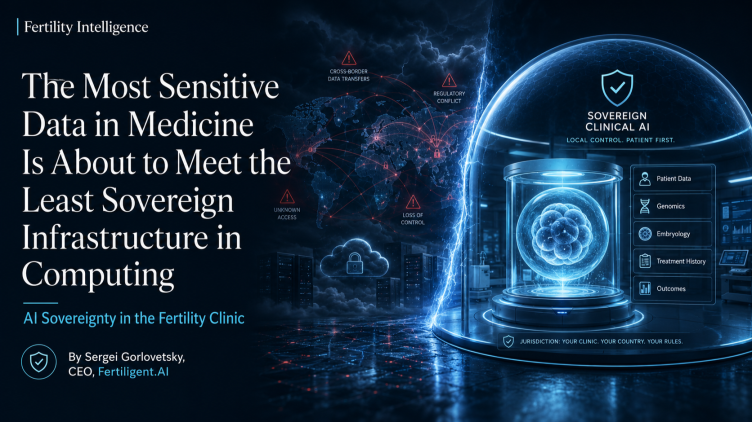
AI in Fertility Clinics: Why Every Practice Needs an AI Platform
The fertility industry is experiencing a digital transformation, and AI assistants in fertility clinics are no longer a luxury—they're becoming essential for competitive practice management. From automated documentation to intelligent patient support, AI is revolutionizing how fertility clinics operate and deliver care.
The Current State of Fertility Clinic Operations
Modern fertility clinics face unprecedented challenges:
- Administrative Overload: Clinicians spend up to 60% of their time on documentation and administrative tasks
- Patient Communication Gaps: With 1 in 6 couples experiencing fertility challenges, patient volume is increasing while face-time decreases
- Regulatory Compliance: HIPAA, GDPR, and clinical documentation requirements demand precision and consistency
- Staff Burnout: Healthcare professionals report high stress levels from repetitive administrative work
Why AI Assistants Are Game-Changers for Fertility Clinics
1. Automated Clinical Documentation
AI assistants can reduce documentation time by 40-60% through:
- Automated Visit Summaries: Generate comprehensive notes from patient consultations
- Protocol Recommendations: Evidence-based treatment suggestions aligned with ASRM guidelines
- Lab Result Integration: Automatic interpretation and flagging of critical values
- Insurance Pre-authorization: Streamlined prior auth requests with proper coding
2. Enhanced Patient Communication and Support
24/7 Patient Support: AI companions provide:
- Immediate responses to common fertility questions
- Medication reminders and cycle tracking assistance
- Emotional support during treatment gaps
- Multilingual communication capabilities
3. Clinical Decision Support
AI systems enhance clinical workflows by:
- Evidence-Based Protocols: Real-time access to latest ESHRE guidelines
- Personalized Treatment Plans: Data-driven recommendations based on patient history
- Risk Assessment: Predictive analytics for cycle outcomes
- Drug Interaction Alerts: Safety checks for fertility medications
Implementation Strategies for Fertility Clinics
Phase 1: Assessment and Planning (Month 1-2)
Current Workflow Analysis
- Identify time-consuming administrative tasks
- Map patient communication touchpoints
- Review compliance requirements
ROI Calculation
- Document current time allocation per provider
- Calculate administrative cost per patient
- Set measurable efficiency targets
Phase 2: Pilot Implementation (Month 3-4)
Start with low-risk, high-impact areas:
- Patient FAQ automation
- Appointment scheduling optimization
- Basic documentation templates
Phase 3: Full Deployment (Month 5-6)
Expand to comprehensive AI integration:
- Complete EMR integration
- Advanced clinical decision support
- Multi-provider workflow optimization
Real-World ROI Data from Fertility Clinics
Leading fertility practices report significant benefits:
- Administrative Time Reduction: 45% decrease in documentation time
- Patient Satisfaction: 35% improvement in response time metrics
- Provider Efficiency: 25% increase in patient consultations per day
- Compliance Scores: 98% accuracy in documentation standards
HIPAA-Compliant AI Solutions
When implementing AI in fertility clinics, ensure:
- Data Encryption: End-to-end encryption for all patient communications
- Access Controls: Role-based permissions for AI system access
- Audit Trails: Complete logging of AI interactions with PHI
- Business Associate Agreements: Proper legal frameworks with AI vendors
The Future of AI in Reproductive Medicine
Emerging trends include:
- Predictive Analytics: AI models for cycle success prediction
- Genomic Integration: AI-assisted genetic counseling support
- Telemedicine Enhancement: Remote monitoring with AI insights
- Research Acceleration: AI-powered clinical trial matching
Getting Started with Fertiligent AI
Fertiligent is an AI operating system for fertility clinics — one clinician-led agent working across every channel:
✅ AI Voice Phone Assistant: Answers your clinic line 24/7, verifies callers, and captures callbacks
✅ Referral & Fax Intake: OCR reads faxed and uploaded referrals — handwritten or typed — into your records
✅ Omnichannel Messaging: Two-way SMS, WhatsApp, and web chat, multilingual
✅ Eva, the Patient Companion: 24/7 plain-language support between visits
✅ Scheduling & Reminders: Booking and reminders that help cut no-shows
✅ Clinician-Led & Compliant: HIPAA/GDPR/PIPEDA, configurable guardrails — AI-supported, never AI-replaced
Next Steps for Your Clinic
- Try the Live Demo: Experience Fertiligent AI in action — See real fertility conversations and responses
- Schedule a Clinical Demo: See Fertiligent AI integrated with clinic workflows
- Pilot Program: Start with a 30-day trial in one department
- Training & Support: Comprehensive onboarding for your team
- Ongoing Optimization: Continuous improvement based on your clinic's needs
🎯 Try Fertiligent AI Demo — Experience AI-powered fertility support now
Related Resources:
- Fertility AI Investment Trends — Market insights
- Patient Emotional Support — Comprehensive care approach
Sources: American Society for Reproductive Medicine (ASRM), European Society of Human Reproduction and Embryology (ESHRE), World Health Organization (WHO) Infertility Statistics